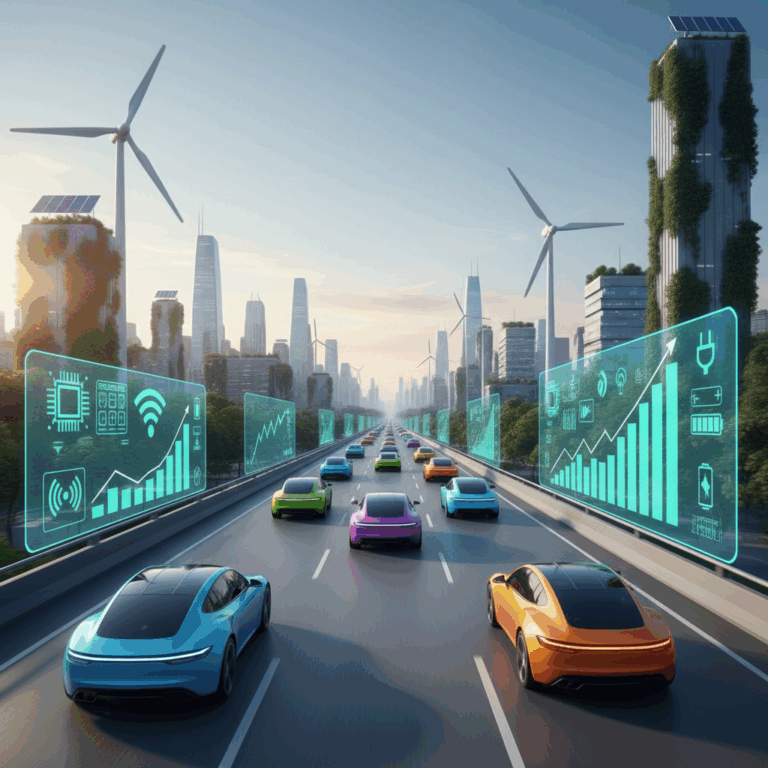
Current Trends in EV Market Growth
The electric vehicle (EV) market is experiencing rapid acceleration, reshaping the global automotive industry. Record sales highlight this unprecedented growth trend.
By 2025, the global EV sales are projected to reach 22 million units, marking a 25% rise from the previous year, and for the first time, one in four cars sold worldwide will be electric.
Global Sales and Market Share Increases
Global EV sales are surging dramatically, with electric cars now representing 25% of total vehicle sales, a sharp increase from just 5% a few years ago.
This growth is driven largely by significant reductions in lithium-ion battery costs, greater availability of affordable EV models, and strengthened government incentives.
Such dynamics have made EV adoption increasingly mainstream, prompting fierce competition among manufacturers focusing on range, price, and charging solutions.
Regional Leadership and Market Distribution
China dominates the EV market, accounting for nearly two-thirds of global sales, with projections of 60% EV sales penetration by 2025.
Europe and the United States remain important players, though US growth has tempered due to regulatory challenges, while emerging markets in Asia and Latin America see sales growth exceeding 60% in 2024.
This regional variation reflects differing policy landscapes and infrastructure maturity, influencing the pace of EV adoption worldwide.
Key Drivers Behind EV Market Expansion
The expansion of the EV market is fueled by several critical factors including technological advances, supportive policies, and market dynamics. These drivers collectively enhance adoption rates globally.
Improved battery technology, government incentives, and the rise of new markets contribute to making EVs more accessible and appealing to a broader audience worldwide.
Advancements in Battery Technology and Cost Reduction
Significant progress in lithium-ion battery technology has drastically lowered production costs, directly impacting EV affordability for consumers.
Enhanced battery efficiency results in better range and shorter charging times, addressing key consumer concerns and spurring greater EV adoption.
These technological improvements have catalyzed investments in battery factories and research, creating a competitive market focused on innovation and cost-effectiveness.
Government Incentives and Policy Support
Government policies promoting EV adoption through subsidies, tax breaks, and infrastructure investments have been pivotal in accelerating market growth.
Many countries implement regulatory frameworks designed to reduce emissions, supporting EV expansion while encouraging automakers to innovate.
These incentives help lower total ownership costs and make EVs more financially attractive compared to traditional vehicles, boosting consumer demand.
Emergence of New Markets and Increased Model Availability
Emerging markets in Asia, Latin America, and beyond are becoming significant contributors to EV sales, with growth exceeding 60% recently.
The availability of diverse EV models targeting different price segments improves market accessibility and consumer choice worldwide.
Market Diversification Benefits
Expanding product ranges and entering new regional markets reduce dependency on established markets and help sustain global EV growth momentum.
Challenges Impacting EV Adoption
Despite the rapid growth of the EV market, several challenges continue to limit widespread adoption. Infrastructure gaps and regulatory issues are among the key hurdles affecting global progress.
The uneven pace of EV adoption across regions emphasizes the need for strategic solutions to address charging network limitations and policy inconsistencies worldwide.
Infrastructure Development and Charging Network Limitations
The expansion of EV charging infrastructure is not keeping up with the increasing number of electric vehicles, creating accessibility issues for many consumers.
Charging networks remain limited in many regions, especially in rural or less developed areas, which affects consumer confidence and convenience in switching to EVs.
Developing fast, reliable, and widely available charging stations requires substantial investment and coordination between private companies and governments.
Without robust infrastructure, EV owners may face range anxiety and longer wait times, slowing down the overall adoption rate.
Regulatory Uncertainty and Regional Disparities
Inconsistent government policies and changing regulations create uncertainty for manufacturers and consumers, impacting long-term EV market projections.
Some regions exhibit strong regulatory support, while others lag behind or experience policy reversals, leading to uneven EV adoption rates globally.
Market leaders like the US face slowdowns due to shifts in incentive programs, emphasizing the need for clearer, stable frameworks to sustain growth.
Addressing these disparities is essential to creating a harmonized global EV ecosystem that supports sustainable automotive and energy transformations.
Future Implications of EV Market Growth
The rapid growth of the EV market is set to profoundly transform industries globally, reshaping the way vehicles and energy systems operate together.
This shift will require strategic investments and coordinated policies to ensure the expansion supports sustainable development and broad adoption world-wide.
Transformation of the Automotive and Energy Industries
The rise of EVs is driving a fundamental change in the automotive sector, shifting focus from internal combustion to electric drivetrains and smart technologies.
Energy industries are also evolving, with increased demand for clean electricity and advanced grid integration to support widespread EV charging needs.
This transition promotes innovation in battery storage, renewable energy integration, and creates new business models for mobility and energy services.
Investment Needs for Sustainable Global Impact
To maintain momentum, substantial investments in charging infrastructure, battery production, and supply chains are essential across all regions.
Clear and consistent policies combined with financial support will be crucial to overcome regional disparities and regulatory uncertainties.
These efforts will enable a truly global, scalable electrification of transport, supporting climate goals and long-term market stability.