Technological Innovations Driving Market Expansion
The global automotive market is rapidly expanding due to key technological innovations. These advancements enhance vehicle performance, sustainability, and user experience.
Electric vehicles and autonomous technologies are at the forefront, revolutionizing how transportation functions worldwide. These trends are supported by innovations in related fields.
Industry players continually integrate cutting-edge technologies to meet evolving consumer demands and environmental standards, driving sustained market growth.
Electric Vehicles and Battery Advancements
Electric vehicles (EVs) have become a primary growth driver, thanks to breakthroughs in long-range battery technologies. Enhanced energy density allows longer trips and faster charging.
Battery innovations, combined with expanding fast-charging infrastructure, reduce range anxiety and promote EV adoption. This shift aligns with global emission reduction goals.
Government incentives and policies further stimulate EV demand, encouraging manufacturers to invest in research and development of more efficient, cost-effective batteries.
Autonomous and Connected Vehicle Technologies
Autonomous driving and connected vehicles transform user interaction with cars through advanced sensors, AI, and 5G connectivity. These features improve safety and convenience.
Self-driving technologies reduce accidents by minimizing human error, while connectivity enables real-time traffic updates and vehicle-to-infrastructure communication.
These innovations also pave the way for new mobility services, reshaping transportation ecosystems and expanding market opportunities across sectors.
Economic and Social Influences on Market Growth
The automotive industry’s growth is deeply influenced by economic expansion and evolving social dynamics. Emerging markets and urbanization patterns are vital drivers reshaping vehicle demand.
Additionally, shared mobility trends and supportive government policies promote sustainable transport solutions that align with global environmental goals. These factors collectively boost market expansion.
Understanding these economic and social influences helps stakeholders adapt strategies to capitalize on shifting consumer preferences and regulatory frameworks shaping the industry.
Emerging Markets and Urbanization
Rapid economic growth in countries like China, India, Brazil, and South Korea fuels increased automotive demand. Urbanization accelerates this trend by concentrating populations in city centers.
Expanding middle classes in these regions seek personal and commercial vehicles, driving production and technological development tailored to local needs and infrastructure.
This dynamic not only enhances market volumes but also propels innovation as manufacturers address urban transport challenges and preferences in emerging economies.
Shared Mobility Trends
Shared mobility, including ride-sharing and car-sharing services, is transforming how people access transportation. This trend reduces the need for private car ownership, especially in densely populated areas.
By offering flexible, cost-effective transport options, shared mobility supports sustainability and eases urban congestion. It also stimulates new business models in the automotive ecosystem.
Automakers and mobility providers collaborate to integrate digital platforms and fleets, positioning themselves to capture growing demand for convenient, shared travel solutions.
Government Policies Supporting Emission Reduction
Governments worldwide implement policies promoting emission reduction to combat environmental challenges. Regulations favor low-emission vehicles and incentivize clean energy adoption.
These policies include subsidies for electric vehicles, stricter emission standards, and investments in charging infrastructure, accelerating the industry’s eco-friendly transition.
Automakers respond by prioritizing sustainable vehicle technologies, ensuring compliance while leveraging policy support to expand their market presence globally.
Digitalization Enhancing User Experience and Efficiency
Digitalization is revolutionizing the automotive industry by improving both user experience and operational efficiency. It integrates advanced data and connectivity features into vehicles.
This transformation leverages telematics and artificial intelligence to provide safer, smarter, and more efficient vehicles while optimizing manufacturing processes and reducing costs.
The convergence of digital technologies ensures the industry remains competitive and responsive to rapidly evolving consumer demands and regulatory requirements.
Telematics Integration and Safety Features
Telematics systems combine GPS, connectivity, and sensor data to deliver real-time information such as traffic alerts, accident warnings, and weather updates directly to drivers.
These integrations enhance safety by enabling faster emergency response and proactive risk management, significantly reducing accident rates and improving road safety.
Furthermore, telematics enable fleet management and usage-based insurance, creating new revenue streams and better service personalization for consumers and businesses alike.
Artificial Intelligence and Automation in Manufacturing
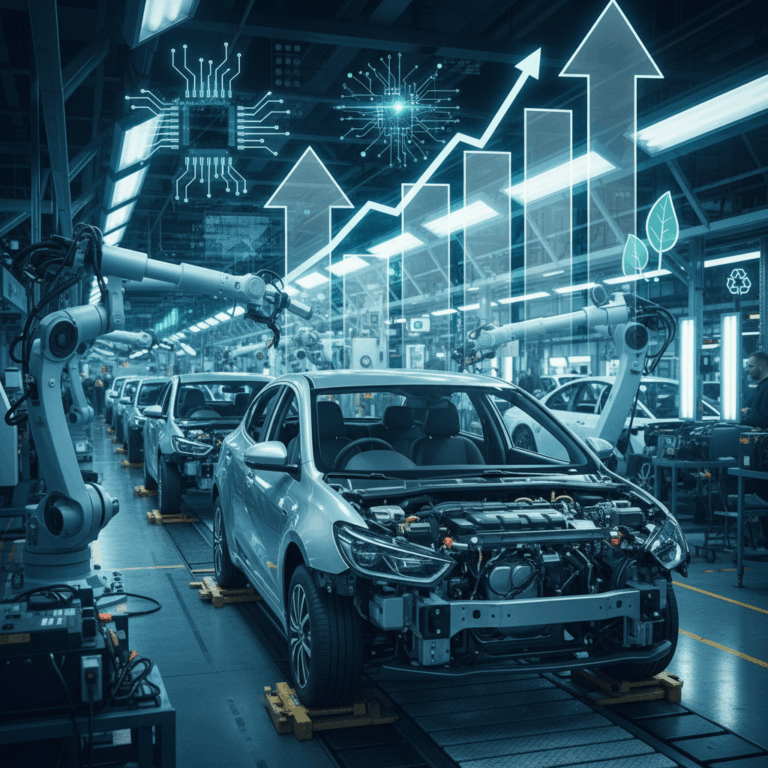
Artificial intelligence (AI) drives smart automation in manufacturing, increasing production speed and precision while minimizing errors and waste. This boosts overall operational efficiency.
Robotic systems powered by AI handle complex assembly tasks, quality control, and predictive maintenance, reducing downtime and lowering production costs significantly.
Such advancements allow manufacturers to adapt swiftly to market changes and customize production according to demand, enhancing competitiveness in a dynamic market.
Future Perspectives and Industry Outlook
The automotive industry is poised for sustained growth driven by continuous advancements in technology and evolving consumer needs. Market expansion will rely on innovation and adaptive strategies.
Emerging trends such as electrification, autonomy, and digital connectivity promise to reshape the sector, presenting opportunities for manufacturers and suppliers to enhance their competitive advantage.
As global demand grows, collaboration between stakeholders will be essential to navigate regulatory landscapes and capitalize on new mobility solutions driving future success.
Sustained Growth Drivers
Sustained growth in the automotive sector is fueled by ongoing innovation in electric and autonomous vehicles, supported by robust infrastructure development and government incentives.
Urbanization and rising incomes in emerging markets continue to increase vehicle demand, while digital integration enhances vehicle functionality and user experience globally.
The alignment of environmental policies with consumer preferences for cleaner and smarter vehicles ensures that the industry’s expansion remains sustainable over the next decade.
Opportunities for Manufacturers and Suppliers
Manufacturers and suppliers have numerous opportunities to capitalize on the shift towards electrification and connectivity by investing in advanced components and software solutions.
Collaborating on integrated mobility platforms and enhancing production automation can drive cost efficiency while delivering innovative products that meet future market needs.
Strategic Partnerships and Innovation
Forming strategic partnerships across technology sectors allows automotive companies to access expertise in AI, battery tech, and telematics, accelerating product development.
Such collaborations foster adaptability and agility, ensuring stakeholders can remain competitive in an evolving, technology-driven automotive landscape worldwide.