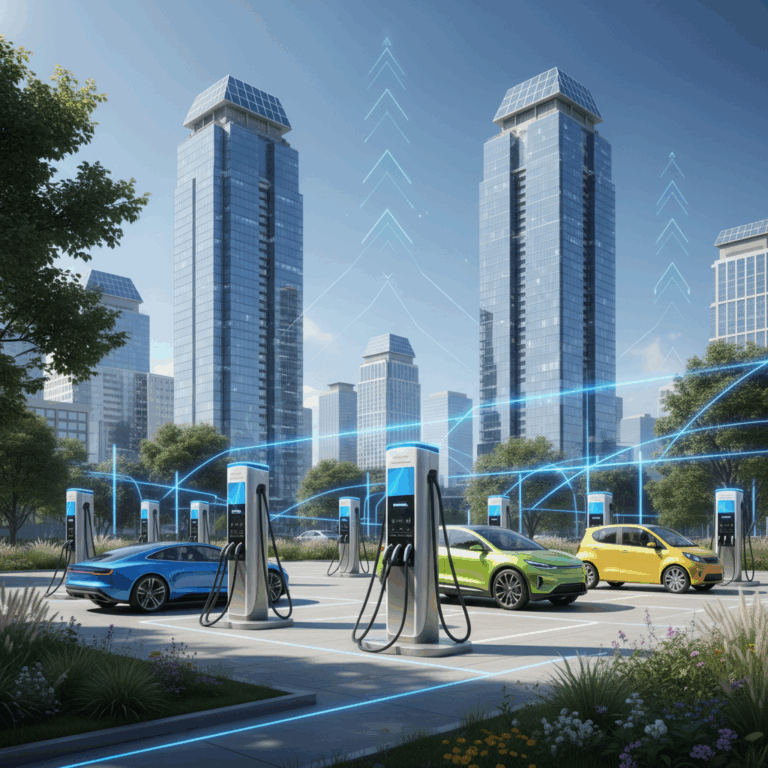
Growth of EV Charging Infrastructure
The growth of EV charging infrastructure is essential for boosting electric vehicle adoption worldwide. In recent years, Spain has experienced significant expansion in this sector.
By mid-2025, Spain had installed over 50,000 public charging points, with continuous improvements in charging capacity and speed. This growth supports the transition to sustainable mobility.
Expansion in Spain and Key Urban Areas
Spain benefits from European funds targeting fast charging points and hydrogen stations, especially along corridors of the Trans-European Transport Network. This aligns with the National Energy and Climate Plan.
Urban centers such as Madrid, Barcelona, and Sevilla lead in the number of public charging stations, enhancing accessibility in critical metropolitan zones and encouraging electric vehicle use.
The plan anticipates the circulation of over five million electric vehicles by 2030, demanding continuous infrastructure expansion to meet mobility needs and reduce range anxiety among drivers.
Public and Private Sector Collaboration
Collaboration between governments and private companies is driving the rapid deployment of charging stations. Financial plans and strategic initiatives accelerate infrastructure growth across Spain.
This partnership facilitates installation of fast and ultra-fast chargers, which are crucial for long-distance travel and improving user trust in electric vehicles’ reliability and convenience.
Digital technologies integrated into stations improve the user experience, enabling location tracking, electronic payments, and reservation options, all contributing to higher adoption rates.
Technological Advancements in Charging Stations
Technological progress in EV charging stations enhances both efficiency and user satisfaction. Innovations are focused on improving accessibility and reducing environmental impact.
Modern charging points integrate advanced digital features and renewable energy use, reinforcing the sustainable benefits of electric vehicles while simplifying the charging process for users.
Fast and ultra-fast chargers represent significant strides in technology, making long-distance travel more feasible and less time-consuming for EV owners.
Digital Integration and User Experience
Charging stations now incorporate digital platforms that allow users to locate available chargers through mobile apps. This ease of access helps reduce wait times and improves convenience.
Features like electronic payments and session reservations streamline the process, fostering a more reliable and user-friendly experience that promotes EV adoption.
These technologies also enable real-time monitoring and remote control, offering drivers greater confidence and flexibility during charging sessions.
Moreover, integrated data systems assist operators in managing station availability and maintenance, ensuring consistent service quality for all users.
Renewable Energy Use in Charging
Increasingly, EV charging stations are powered by renewable energy sources, such as solar and wind, to minimize their environmental footprint and promote green energy consumption.
This integration supports the ecological benefits of electric vehicles by reducing emissions associated with electricity generation, thus further lowering overall carbon impact.
Using renewable energy for charging also contributes to energy independence and resilience, aligning with broader sustainability goals set by governments and organizations.
Some stations incorporate on-site renewable generation and battery storage, allowing for efficient energy use and grid load balancing.
Development of Fast and Ultra-Fast Chargers
Fast and ultra-fast charging technologies are fundamental to addressing range anxiety and expanding EV usability, especially for long-distance travel.
New chargers significantly reduce charging time, enabling users to replenish batteries within minutes rather than hours, thereby improving overall convenience.
These advancements demand compatible EV battery technology and robust electrical infrastructure capable of supporting high power levels safely.
Interesting Fact
Some ultra-fast chargers can deliver up to 350 kW, allowing certain electric cars to reach 80% charge in under 20 minutes, revolutionizing the user experience.
Challenges in Infrastructure Expansion
The rapid expansion of EV charging infrastructure presents significant challenges, particularly in managing the electrical grid’s capacity and the growing demand from users.
Ensuring the grid can support increased loads without disruption is critical to maintaining reliable, efficient charging services and avoiding power outages or congestion.
Electrical Grid Capacity and Demand Management
The surge in electric vehicle adoption stresses local electrical grids, requiring upgrades and smart management systems to handle peak demand effectively.
Grid operators must balance charging needs with overall energy consumption, preventing overloads while supporting the integration of renewable energy sources.
Intelligent charging strategies, such as demand response and load shifting, help mitigate congestion by optimizing charging times based on grid conditions and user behavior.
Cooperation between utilities, charging providers, and consumers is essential to design scalable solutions that ensure stable supply and promote sustainable energy use.
Policy and Future Outlook
Government policies and funding play a crucial role in accelerating the deployment of EV charging stations. Strategic plans aim to support infrastructure development nationwide.
These initiatives include investments in fast chargers and integration within transport corridors, creating a comprehensive network that facilitates long-distance electric vehicle travel.
Government Funding and Strategic Plans
European funds and national programs have been allocated to build hundreds of rapid charging points, especially along key transport routes, enhancing connectivity across regions.
National strategies like Spain’s Integrated Energy and Climate Plan prioritize expanding the EV charging network to meet ambitious climate and mobility targets.
Public-private partnerships are encouraged to leverage investments, ensuring efficient use of resources and faster station rollout to meet increasing demand.
Goals for Sustainable Mobility by 2030
By 2030, plans foresee over five million electric vehicles on roads, requiring substantial charging infrastructure growth to support sustainable urban and interurban mobility.
Key objectives include reducing greenhouse gas emissions, promoting renewable energy use, and achieving accessibility to charging stations in both cities and rural areas.
These goals align with broader sustainability commitments, aiming to transform the transport sector and reduce dependence on fossil fuels in the coming decade.