Advanced Driver Assistance Systems (ADAS)
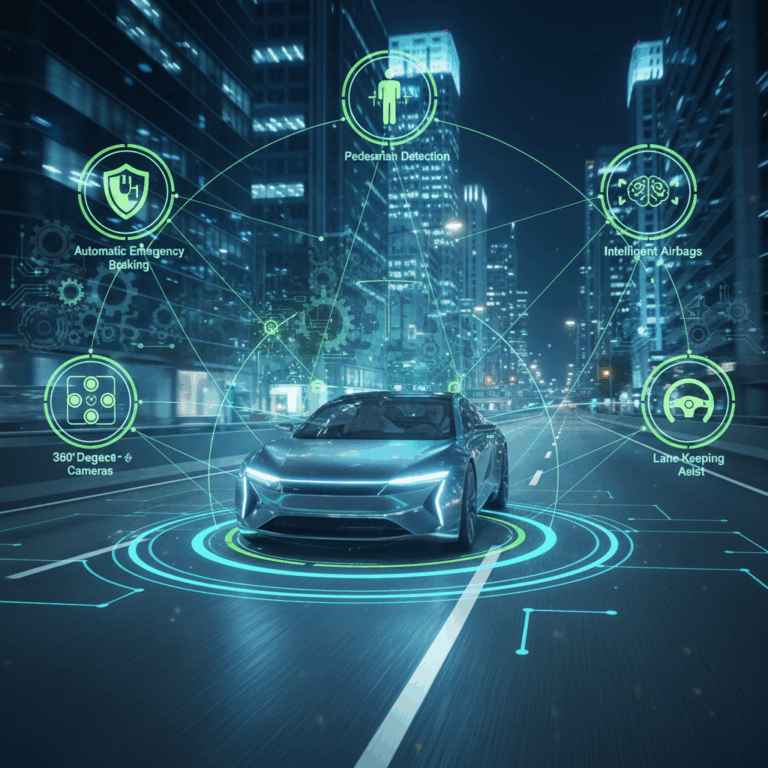
Advanced Driver Assistance Systems (ADAS) are transforming vehicle safety by providing drivers with enhanced awareness and control. These systems reduce accidents by assisting in critical driving tasks.
By integrating sensors and intelligent algorithms, ADAS helps detect hazards and alerts drivers to prevent collisions, significantly improving road safety for all users.
With continuous innovations, ADAS now includes features like pedestrian detection, lane change assistance, and automatic emergency braking, making driving safer and less stressful.
Pedestrian Detection
Pedestrian detection systems use radar and camera technologies to identify pedestrians near or on the road. These systems alert the driver or automatically initiate braking to avoid collisions.
This technology is vital in urban environments where unexpected pedestrian crossings are common. By recognizing human shapes and movement, it reduces pedestrian-related accidents.
Modern pedestrian detection also adapts to low-light conditions, improving safety during nighttime driving and poor visibility scenarios through enhanced sensor capabilities.
Lane Change Assistance and Emergency Braking
Lane change assistance uses sensors to monitor blind spots, alerting drivers when surrounding vehicles pose risks during lane shifts. This minimizes side collisions on highways.
Emergency braking systems detect imminent collisions and automatically apply brakes to reduce impact or avoid crashes. This technology is especially effective during sudden stops.
Together, these features enable proactive safety by supporting quick driver reactions and intervening when necessary to protect vehicle occupants and others on the road.
Autonomous Driving Technologies
Autonomous driving technologies are reshaping car safety by reducing reliance on human input. These systems enable vehicles to navigate and respond to road conditions more efficiently.
With different levels of autonomy, vehicles range from driver assistance to complete self-driving capabilities, enhancing safety by minimizing human errors.
Advancements in sensors and algorithms allow these systems to detect obstacles and make informed decisions, significantly lowering accident risks.
Levels of Autonomy and Human Intervention
Autonomous vehicles operate at various levels, from partial automation where drivers remain engaged, to full autonomy requiring no human input.
Levels 3 and 4 allow vehicles to handle driving under specific conditions, but human intervention may still be necessary during complex scenarios.
This graduated approach helps build trust and ensures safety while technology continues to evolve towards fully autonomous driving.
LIDAR and Intelligent Sensors
LIDAR technology uses laser pulses to create detailed, real-time maps of the vehicle’s surroundings, enhancing obstacle detection accuracy.
Intelligent sensors complement LIDAR by integrating cameras, radar, and ultrasonic devices to provide comprehensive environmental awareness.
Together, these sensors enable precise navigation and timely responses to dynamic road situations, improving overall vehicle safety.
Leading Companies in Autonomous Vehicles
Industry leaders like Waymo and Tesla are pioneering autonomous vehicle deployment through advanced technology and extensive testing.
These companies invest heavily in AI, sensor fusion, and machine learning to refine driving algorithms and safety protocols.
Innovation Impact
Their innovations not only advance self-driving capabilities but also influence regulatory standards and public acceptance of autonomous vehicles worldwide.
Vehicle Connectivity and Data Integration
Vehicle connectivity is revolutionizing automotive safety by enabling cars to communicate with each other and external networks. This integration helps prevent accidents by sharing real-time information.
Data integration ensures vehicles stay updated with the latest software and safety features, minimizing risks and improving driving experience. Connected cars are becoming mobile data hubs on the road.
With faster communication technologies, cars are now capable of remote diagnostics and receiving updates over the air, ensuring continuous performance improvements and security enhancements.
5G Technology and Remote Updates
5G technology empowers vehicles with ultra-fast data transfer and low latency, crucial for real-time safety applications like collision avoidance and traffic alerts.
Remote software updates allow vehicles to receive the latest security patches and feature enhancements without visiting a service center, maintaining optimal safety standards.
This continuous update capability reduces system vulnerabilities and enables manufacturers to improve vehicle functions dynamically based on data collected from the fleet.
Infotainment Systems as Mobile Data Hubs
Modern infotainment systems serve as mobile data hubs, integrating GPS, media, and communication functions to enhance driver connectivity and road safety.
These systems also collect valuable data on driving behavior and environmental conditions, which can be used to optimize vehicle performance and tailor safety features.
By connecting smartphones and cloud services, infotainment platforms provide drivers with seamless access to navigation, traffic updates, and emergency services, improving overall situational awareness.
Driver Monitoring and Safety Innovations
Driver monitoring technologies are revolutionizing safety by utilizing artificial intelligence to detect signs of fatigue and distraction in real time. These systems help prevent accidents caused by impaired driving states.
Innovative safety features adapt to the driver’s condition, enhancing protection beyond traditional methods. These advances aim to create a safer driving environment for everyone on the road.
By continuously assessing driver alertness, vehicles can provide timely warnings or take corrective actions, reducing crash risks caused by human error.
AI-Based Driver Fatigue and Distraction Detection
AI-based systems analyze facial expressions, eye movements, and head position to detect driver fatigue or distraction early. This real-time monitoring enables proactive safety measures.
When signs of drowsiness or inattention are detected, the system alerts the driver through visual, auditory, or haptic feedback, encouraging rest or refocusing attention.
These technologies are increasingly integrated into vehicles, offering continuous support to maintain driver vigilance and reduce accident likelihood caused by impaired focus.
Adaptive Safety Features like Volvo’s Super Belt
Volvo’s Super Belt is an adaptive seatbelt that adjusts its tension dynamically in response to crash conditions, providing enhanced restraint and reducing injury risk.
This technology works by tightening or loosening the belt to distribute crash forces more effectively, offering better protection than conventional seatbelts.
Innovations like the Super Belt demonstrate how smart safety features can tailor protection to specific crash scenarios, improving overall occupant safety.