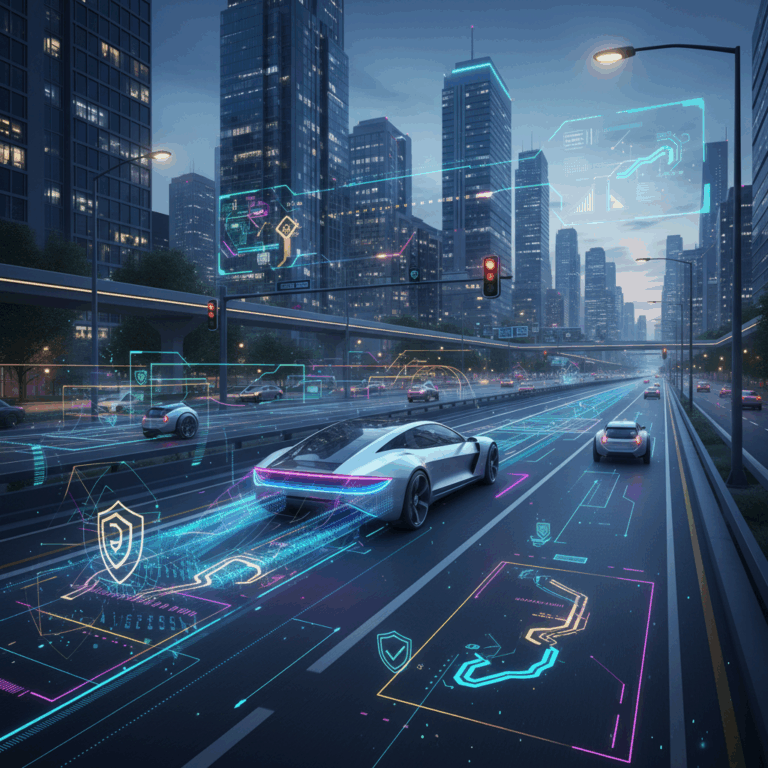
Basics of Car-to-X Communication
Car-to-X Communication is a transformative technology enabling real-time exchange of data between vehicles and road infrastructure. It significantly enhances traffic safety and efficiency by making vehicles aware of their surroundings faster than traditional means.
This system allows cars to share critical information such as position, speed, direction, and hazards, improving situational awareness and enabling proactive responses to road conditions.
Definition and Mechanisms
Car-to-X, also called V2X (vehicle-to-everything), involves wireless communication between vehicles and external entities to ensure a continuous data flow. It enhances driver assistance and automated systems by providing timely updates.
The communication mechanisms include the exchange of information about braking, accidents, obstacles, weather, and road works, which helps in anticipating risks before they become apparent to drivers.
By leveraging technologies such as 5G, Car-to-X offers near-instantaneous data transmission, critical for automated responses in connected vehicles and enabling safer traffic environments.
Types of Connected Entities
Car-to-X includes various connected participants: vehicles, traffic signals, road signs, and other infrastructure elements. This interconnected network ensures seamless information sharing to improve traffic management and safety.
Vehicles communicate not only with each other (V2V) but also with infrastructure (V2I), pedestrians (V2P), and networks (V2N), creating a comprehensive ecosystem for smart transportation solutions.
This diverse integration supports advanced applications like hazard alerts, traffic light optimization, and coordinated maneuvers, transforming traditional road systems into intelligent, adaptive environments.
Impact on Traffic Management
Car-to-X communication plays a crucial role in improving traffic management by enabling real-time data exchange between vehicles and infrastructure. This connectivity helps optimize traffic flow and reduce delays.
With live updates on road conditions, drivers and traffic systems can make informed decisions to avoid congestion and enhance overall mobility, leading to safer and more efficient roadways.
Real-time Traffic Flow Optimization
By sharing data instantly, vehicles can adjust speeds and routes dynamically, easing congestion and maintaining smooth traffic movement. This leads to less stop-and-go driving and improved travel times.
Traffic signals equipped with Car-to-X technology can adapt their cycles based on actual traffic volumes, reducing unnecessary waiting and enabling coordination across intersections to prevent bottlenecks.
The system’s ability to detect incidents quickly allows rerouting suggestions to drivers, minimizing disruption and optimizing network performance at peak times effectively.
Reduction of Congestion and Emissions
Optimized traffic flow lowers idle times and stop-start driving, which are primary contributors to vehicle emissions. Thus, Car-to-X helps reduce pollution and fuel consumption significantly.
By smoothing traffic patterns and avoiding traffic jams, this communication technology supports environmental sustainability objectives and promotes greener urban mobility.
Reduced congestion also benefits economic productivity by cutting down time lost in traffic and lowering overall transportation costs.
Integration with Infrastructure Systems
Car-to-X communication integrates seamlessly with existing infrastructure like traffic lights, signage, and road sensors, creating an intelligent transportation network that enhances coordination and control.
This interconnectedness enables infrastructure to provide real-time status updates and warnings directly to vehicles, improving responsiveness to changing traffic conditions and hazards.
Interesting Insight
Smart city projects increasingly rely on Car-to-X to synchronize infrastructure systems, offering dynamic traffic management that evolves with demand and helps prepare roads for future autonomous vehicles.
Enhancements in Road Safety
Car-to-X communication significantly improves road safety by enabling vehicles to anticipate and react to hazards more quickly than ever before. This real-time data exchange heightens driver awareness.
By sharing information about sudden braking, obstacles, and dangerous conditions, Car-to-X reduces accident risks and helps create a safer driving environment for all road users.
Accident Prevention and Hazard Alerts
Vehicles equipped with Car-to-X systems can send and receive alerts about sudden stops, collisions, or obstacles ahead, allowing drivers to react promptly and avoid accidents.
This early warning capability extends to hazards like poor weather conditions, road construction, and unexpected roadblocks, giving drivers extra time to adjust safely.
By improving situational awareness and enabling proactive responses, Car-to-X communication plays a crucial role in reducing road accidents and injuries.
Role of 5G and Instantaneous Communication
The introduction of 5G networks enhances Car-to-X communication with extremely low latency and high-speed data transfer, essential for instant hazard detection and response.
5G enables vehicles to exchange critical information almost instantaneously, supporting automated safety systems and enabling multi-vehicle coordination to prevent collisions.
This instant connectivity drives advancements in Advanced Driver Assistance Systems (ADAS) and lays the foundation for fully autonomous, safe driving experiences.
Future Developments and Industry Implications
The future of Car-to-X communication lies in its integration with advanced driver assistance and autonomous driving technologies. This evolution promises safer, smarter, and more efficient roads worldwide.
Industry innovators are focusing on leveraging rapid data exchange and AI to enhance vehicle automation, shaping the future mobility landscape and transforming transportation systems fundamentally.
Advanced Driver Assistance Systems (ADAS)
ADAS utilize Car-to-X communication to expand vehicle awareness beyond line of sight, providing timely alerts and automated responses to potential hazards, reducing human error.
Systems like adaptive cruise control, lane-keeping assist, and emergency braking become significantly more effective when combined with real-time data from surrounding vehicles and infrastructure.
The synergy of Car-to-X and ADAS enhances overall road safety and comfort, supporting drivers with proactive warnings and corrective measures that adapt to ever-changing conditions.
Path Toward Autonomous Driving
Car-to-X communication is a cornerstone for autonomous vehicle development by enabling cooperative behavior between cars and infrastructure, essential for safe and efficient self-driving operations.
Real-time sharing of position, speed, and environmental data allows autonomous vehicles to anticipate hazards, coordinate maneuvers, and optimize traffic flow with unprecedented precision.
This technology reduces reliance on onboard sensors alone, facilitating higher levels of automation and accelerating the transition to fully autonomous driving on public roads.