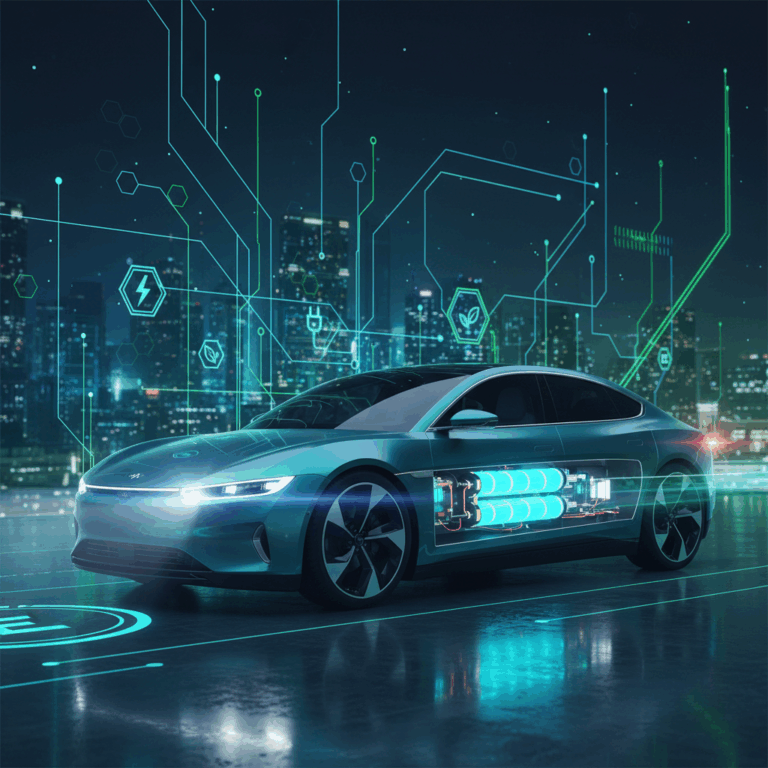
Battery Technology Innovations
The rapid advancement in battery technology is revolutionizing electric vehicles by enhancing energy storage, safety, and charging speed. Innovations focus on maximizing efficiency and longevity.
Key breakthroughs like solid-state and silicon anode batteries promise to overcome today’s limitations. These technologies are critical in pushing electric vehicles toward mainstream adoption.
By integrating new materials and designs, manufacturers aim to deliver longer ranges, faster recharge times, and safer battery systems, marking a new era for the EV industry.
Solid-State Batteries
Solid-state batteries replace liquid electrolytes with solid materials, increasing energy density by up to 50% compared to traditional lithium-ion cells. This boosts vehicle range significantly.
These batteries offer reduced safety risks by minimizing fire hazards, as the solid electrolytes are less prone to leaks and thermal runaway.
Additionally, solid-state cells provide longer lifespans due to greater resistance to degradation, improving overall battery durability for EVs.
Silicon Anode Batteries
Silicon anode batteries utilize silicon instead of graphite, dramatically increasing the capacity of the battery up to tenfold. This advancement supports ranges over 4,800 km per charge.
This innovation addresses range anxiety by bringing electric vehicle performance closer to that of traditional gasoline cars.
Research continues to stabilize silicon anodes, overcoming challenges related to volume expansion during charging cycles, which is critical for commercial viability.
Impact on Electric Vehicle Performance
Advancements in battery technology have a direct and profound impact on electric vehicle (EV) performance, enhancing key aspects like range, charging speed, and safety. These improvements are crucial for expanding EV adoption.
By increasing energy density and optimizing battery systems, newer batteries enable longer drives on a single charge while reducing downtime. This truly changes the driving experience for EV users worldwide.
Innovations also focus on safety, reducing risks associated with thermal events, and making EVs more reliable and attractive to consumers. This shift supports a sustainable and practical transportation future.
Increased Energy Density and Range
New battery technologies dramatically boost energy density, allowing EVs to travel farther on one charge. Solid-state batteries alone can increase capacity by up to 50%, translating into longer ranges.
Silicon anode batteries multiply energy capacity even more, potentially enabling distances beyond 4,800 kilometers per charge. This surpasses current standards and eases the range anxiety concerns of consumers.
These energy density improvements close the gap between electric and gasoline vehicles, making EVs a more viable and appealing choice for everyday travel and long trips alike.
Faster Charging Times
New chemistries and battery designs reduce charging times significantly, with some batteries capable of full recharge in minutes rather than hours. This convenience is transformative for EV owners.
Improvements in solid electrolytes and heat management facilitate rapid ion transfer, enabling faster energy replenishment without degrading battery life.
Faster charging infrastructure combined with advanced batteries can support more efficient use of vehicles, making EVs more practical for diverse lifestyles.
Enhanced Safety Features
Safety is a pivotal benefit of novel battery technologies, especially those using solid-state electrolytes, which minimize leakage and reduce fire risks compared to liquid counterpart cells.
These safer batteries offer greater thermal stability, lowering the chances of overheating and thermal runaway during operation or accidents.
Ultimately, the enhanced safety makes electric vehicles more trustworthy and encourages wider acceptance and regulatory confidence in EV technology.
Material and Design Advances
Innovations in materials and battery design are central to improving electric vehicle efficiency, affordability, and environmental impact. Researchers explore alternatives to traditional components.
New chemical formulations and structural integration methods enable compact, lighter, and more powerful batteries, meeting growing demand for better EV performance and sustainability.
These advances pave the way for next-generation electric vehicles that combine practicality with eco-friendly solutions, fostering wider market adoption and long-term viability.
Alternative Battery Chemistries
Alternative chemistries such as sodium-ion batteries offer promising options by reducing reliance on scarce metals like cobalt and nickel. This shift can lower production costs and environmental risks.
These chemistries provide competitive energy densities and longer cycle lives, contributing to more sustainable and scalable battery manufacturing processes for electric vehicles.
By diversifying battery materials, manufacturers can mitigate supply chain challenges while maintaining strong performance and safety standards in EV batteries.
Integrated Battery Chassis Designs
Integrating batteries directly into vehicle chassis designs improves space efficiency and lowers weight, enhancing both driving dynamics and overall vehicle performance.
This approach, known as cell-to-pack or cell-to-chassis technology, simplifies assembly and reduces manufacturing complexity and costs.
Such designs also enhance safety by reinforcing structural integrity and improving thermal management, contributing to longer battery life and more reliable electric vehicles.
Sustainability and Future Prospects
The focus on sustainability is reshaping the future of electric car batteries by addressing environmental challenges linked to material sourcing and disposal. Sustainable practices are becoming a priority in battery development.
Future prospects involve not only enhancing energy density and performance but also minimizing ecological footprints. Innovations aim to balance high performance with responsible material use and recycling.
Advancements in battery chemistry and design promise cleaner production methods and longer-lasting batteries, which collectively support the global shift toward greener transportation.
Environmental Impact of Battery Materials
Many traditional battery materials, such as cobalt and nickel, have significant environmental and ethical concerns, including mining impacts and resource scarcity. Alternatives are urgently needed.
Research is exploring less harmful materials like sodium and silicon to reduce dependency on conflict minerals and lower ecological damage during extraction and processing.
Improving recycling technologies and battery lifecycle management will also help limit waste and pollution, making electric car batteries more sustainable in the long term.
These efforts are essential to ensure that the rise of electric vehicles does not create new environmental problems while addressing climate change.
Energy Density Milestones and Market Adoption
Recent battery innovations have achieved energy densities of 400-500 Wh/kg, nearly doubling current standards. This milestone is critical for longer electric vehicle ranges and faster charging.
Such performance gains are expected to accelerate consumer acceptance by making EVs more competitive with gasoline cars in both range and convenience.
Market adoption is further supported by integrated designs and cost reductions, helping manufacturers scale up production and lower prices for wider accessibility.
Continued progress promises a future where electric vehicles dominate transport markets with batteries that are powerful, affordable, and environmentally responsible.