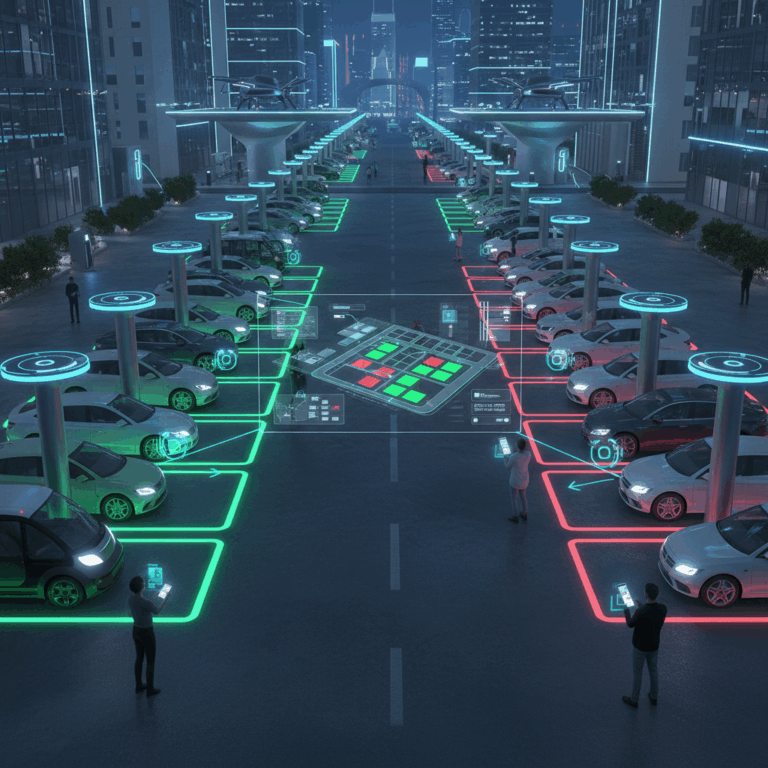
Smart Parking Technology Overview
The rise of smart parking solutions is revolutionizing urban mobility by optimizing parking space management and enhancing user convenience. These technologies use advanced systems to improve city traffic flow and reduce time spent searching for parking.
Key components include IoT sensors that provide real-time monitoring of parking availability and mobile apps that enable digital payments and reservations. Together, they offer a seamless parking experience.
By integrating intelligent features like data analytics and live updates, smart parking systems ensure more efficient use of urban space, helping to lower congestion and environmental impact.
IoT Sensors and Real-Time Monitoring
IoT sensors embedded in parking lots detect vacant spots and share data continuously. This information enables drivers to find open spaces without unnecessary searching.
These sensors connect to cloud platforms that display real-time updates, allowing users and operators to monitor availability instantly. The technology significantly cuts down time and fuel wasted in congestion.
Moreover, such monitoring supports dynamic pricing and analytics, adapting to demand patterns. This enhances overall management efficiency and customer satisfaction in busy urban areas.
Mobile Applications and Digital Payments
Mobile apps are essential for accessing smart parking, offering features like spot reservation, navigation, and cashless payment options. Users book spaces quickly and pay securely from their phones.
Integrating digital payments speeds up entry and exit processes at parking facilities, reducing queues and improving traffic flow around parking zones. The convenience appeals to modern drivers seeking hassle-free experiences.
These applications also provide personalized notifications and support loyalty programs, encouraging repeat use and enhancing the overall parking ecosystem’s efficiency and user engagement.
Impact on Urban Mobility and Environment
Smart parking solutions greatly enhance urban mobility by reducing the time drivers spend searching for parking. This optimization leads to smoother traffic flow and less congestion in busy city areas.
By integrating real-time data and intelligent guidance, these systems minimize unnecessary driving. This directly translates into fewer traffic jams, benefiting both drivers and city planners.
Furthermore, decreased congestion results in lowered vehicle emissions, contributing to improved urban air quality and a healthier environment for city residents.
Reduction of Traffic Congestion
Up to 30% of urban traffic congestion is caused by drivers looking for parking spaces. Smart parking solutions dramatically cut this figure by guiding drivers to available spots efficiently.
Real-time monitoring and dynamic routing reduce search times and vehicle idling, which not only eases congestion but also lowers fuel consumption and stress for motorists.
This targeted approach to parking management helps cities allocate road space more effectively and reduces overall traffic volumes during peak hours.
Decrease in Pollution and Improved Air Quality
Less time spent circling for parking decreases emissions from idling and slow-moving vehicles. This reduction has a notable positive effect on urban air quality and public health.
Smart parking systems contribute to cutting down harmful pollutants like carbon monoxide and nitrogen oxides, which are associated with vehicle-related pollution in cities.
Consequently, they support environmental goals by promoting cleaner, more sustainable urban transportation ecosystems that benefit communities.
Enhanced User Experience and Efficiency
Smart parking technologies provide a seamless experience through mobile apps and digital payments, making parking hassle-free and improving driver satisfaction.
Automated workflows speed up vehicle entry and exit, enhancing efficiency for both users and parking operators while reducing traffic build-up at facility entrances.
The combination of intuitive platforms and real-time information empowers drivers to plan ahead and avoid parking stress, fostering smarter and more enjoyable urban mobility.
Innovations Supporting Sustainability
Smart parking solutions are increasingly aligned with sustainability goals, integrating innovative technologies that support eco-friendly urban mobility. These advancements promote greener cities by reducing emissions and encouraging electric vehicle use.
By embedding sustainable features, smart parking systems not only optimize space but also advance the transition to cleaner transportation alternatives and smarter urban infrastructure.
This combination fosters a more sustainable and efficient parking ecosystem crucial for future urban development and environmental stewardship.
Integration with Electric Vehicle Charging
Smart parking systems are now commonly paired with electric vehicle (EV) charging stations, meeting the growing demand for sustainable transportation. This integration ensures convenient access to charging while parking.
Including EV chargers in parking facilities supports the adoption of electric cars and reduces dependency on fossil fuels, helping cities lower their carbon footprint. Real-time updates guide drivers directly to equipped spots.
The synergy between smart parking and EV infrastructure creates a comprehensive solution, encouraging cleaner mobility choices and promoting sustainable urban growth.
Automated and Modular Parking Solutions
Advanced automated parking structures use robotics and mechanized systems to maximize space efficiently and reduce the land footprint needed for parking. These technologies support sustainable urban design.
Modular parking designs enable cities to adapt parking capacity dynamically according to demand, reducing construction waste and allowing scalable, flexible solutions that respond to growth.
Combining automation with modularity optimizes available space while cutting energy use and emissions, contributing positively to urban sustainability goals.
Future Trends and Market Growth
The global market for smart parking solutions is expanding rapidly as cities worldwide adopt these technologies to enhance urban mobility. This growth is driven by rising demand for efficient space management.
With advances in IoT, AI, and mobile connectivity, smart parking systems are becoming more accessible and affordable, paving the way for widespread implementation in both developed and developing regions.
Increasing urbanization and the pressure on existing infrastructure further accelerate the need for innovative parking solutions that optimize resource use and reduce congestion worldwide.
Expansion of Smart Parking Solutions Globally
Smart parking adoption is growing markedly across continents, especially in Europe, the Americas, and Asia-Pacific regions. Governments and private sectors invest heavily to upgrade urban infrastructure.
Countries are recognizing the benefits of reducing traffic congestion and emissions through technology that guides drivers to available parking and facilitates contactless payments.
This global expansion supports smarter urban planning and fosters cross-industry collaborations, ensuring cities meet their mobility and sustainability objectives efficiently.
Strategic Importance for Smart Cities
Smart parking is a cornerstone of smart city frameworks, integrating seamlessly with other urban systems such as public transit, electric vehicle networks, and traffic management.
By optimizing parking resources, cities improve livability, reduce environmental impact, and enhance economic activity. These benefits align closely with smart city goals for sustainability and innovation.
Implementing smart parking solutions builds resilient urban environments that can adapt to future demands, making it a strategic priority for city planners aiming to create intelligent, connected communities.