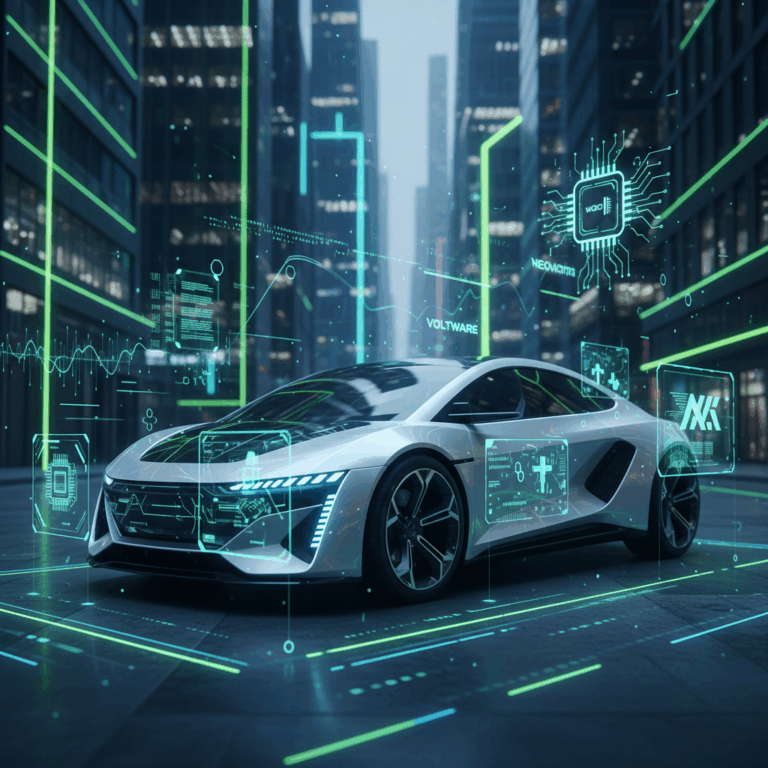
Automotive innovation trends in 2025
In 2025, the automotive industry is undergoing a revolution led by startups focusing on electrification and autonomous driving. These innovations are shaping the future of mobility worldwide.
Startups deliver agile, user-centered solutions that emphasize sustainability and connectivity. They complement efforts by industry giants investing heavily in AI and new tech developments.
Focus on electrification and autonomous driving
The trend toward electrification accelerates with startups extending electric vehicle range and improving charging station networks. Companies like TERA Technologies and Gaadin exemplify this.
Autonomous driving progress is driven by pioneers such as ZongMu Technology and Pony.ai, whose AI applications enhance vehicle safety and operational efficiency. This reshapes how we think about transportation.
Personalized autonomous journeys are also emerging, adapting rides to individual preferences while increasing accessibility and convenience for users globally.
User experience and sustainability in startups
Startups prioritize user experience by integrating digital personalization and augmented reality tools, like HMDrive, to make driving safer and more intuitive.
Sustainability is central, with companies designing lightweight, eco-friendly vehicles and predictive maintenance systems that reduce waste and extend vehicle life cycles.
Venture Awards Spotlight
Top startups honored at the 2025 Venture Awards showcase innovation in customer care, connectivity, and future mobility services, highlighting strong collaboration between startups and major corporations.
Leading automotive tech startups and their specialties
In 2025, leading automotive tech startups focus on specialized innovations that challenge traditional industry norms. Their roles range from autonomous driving breakthroughs to smart vehicle manufacturing.
These startups leverage cutting-edge AI, augmented reality, and digital solutions to deliver smarter, more sustainable, and user-focused automotive technologies, reshaping the sector globally.
Autonomous driving and AI pioneers
Startups like ZongMu Technology and Pony.ai lead the autonomous driving space, applying advanced AI to enhance vehicle safety and operational efficiency. Their innovations are critical in progressing self-driving technologies.
These pioneers focus on machine learning integration and sensor technologies that improve decision-making in dynamic driving conditions, helping to reduce accidents and increase automation capabilities.
By pushing the boundaries of AI, they enable vehicles to understand and interact with complex environments with minimal human intervention, marking a major step toward fully autonomous transportation.
Personalization and augmented reality solutions
Companies such as Social Self Driving tailor autonomous rides to individual preferences, offering personalized experiences that improve passenger comfort and accessibility in urban transit.
HMDrive integrates augmented reality into driver assistance systems, creating intuitive navigation aids that enhance safety by overlaying digital information directly onto real-world views.
This combination of personalization and AR technology shifts the driving experience from generic to adaptive, allowing users to interact with vehicles in novel and engaging ways.
Energy efficiency and electric vehicle support
Innovators like TERA Technologies focus on extending electric vehicle range through advanced battery technologies, addressing one of the main hurdles in EV adoption.
Gaadin provides intelligent management for charging stations, optimizing energy use and infrastructure connectivity, which facilitates the broader deployment of electric vehicles worldwide.
These efforts contribute significantly to sustainability by improving energy efficiency and supporting the transition to cleaner transportation systems.
Digital maintenance and smart vehicle manufacturing
Pitcraft uses AI-driven predictive analytics to foresee vehicle faults and recommend precise repairs, optimizing workshop operations and reducing downtime for users.
AIO Motors manufactures smart electric vehicles emphasizing lightweight, sustainable structures combined with advanced driver-assistance systems for enhanced safety and performance.
The digital transformation of maintenance and production processes leads to more efficient, reliable vehicles and marks a shift towards intelligent lifecycle management in the automotive industry.
Emerging alternative technologies
The automotive industry in 2025 sees new frontiers beyond electrification and autonomy, with startups developing innovative alternative technologies to diversify mobility solutions.
Among these, hydrogen fuel cell vehicles and digital marketplaces are gaining traction, combining sustainability and convenience to reshape vehicle ownership and energy usage.
Hydrogen fuel cell vehicles and digital marketplaces
Startups like H2X Global are pioneering hydrogen fuel cell technology, offering vehicles powered by clean energy with fast refueling and longer ranges than typical EVs.
Hydrogen vehicles present a promising path to reduce emissions and dependence on fossil fuels, especially for heavy-duty transport and long-distance travel, aligning with sustainability goals.
Simultaneously, platforms such as CARS24 and Chehaoduo revolutionize car buying and selling by fully digitizing the process, improving transparency and user experience in used vehicle markets.
Impact of startups on the automotive industry
Startups are reshaping the automotive sector by fostering innovation and agility. Their collaboration with established corporations accelerates technology adoption and market expansion.
This synergy not only boosts startup growth but also drives the entire industry toward a more sustainable, connected, and user-centric future in mobility.
Collaboration between corporations and startups
Partnerships between large automakers and startups are crucial for technological validation and scaling innovations globally. This cooperation helps startups access resources and expertise.
Automotive groups gain fresh ideas and agile development, enabling faster responses to market demands and technological trends like AI, electrification, and connectivity.
Initiatives such as venture awards highlight these collaborations, showcasing promising startups that enhance customer experience, connected services, and mobility solutions.
Redefining mobility and business models
Startups challenge traditional business models by introducing platform-based services, autonomous ride personalization, and digital marketplaces, expanding how mobility is offered and experienced.
This evolution promotes more flexible, on-demand transportation options and transforms ownership notions through digital sales and sharing platforms.
Ultimately, startups drive the automotive industry to embrace sustainability, user experience, and innovative technologies that redefine vehicle use for the next decade.