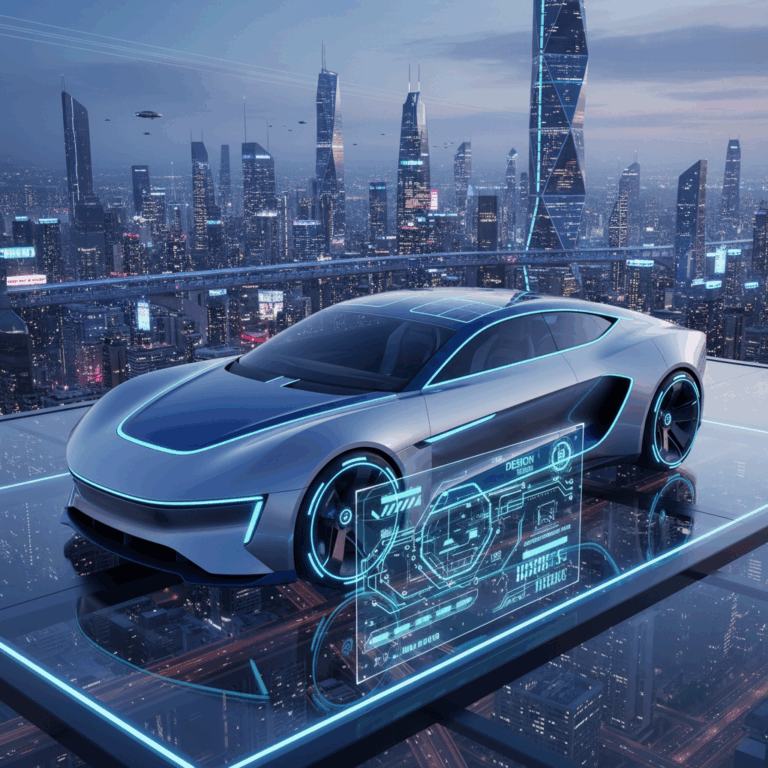
Key Trends Shaping Future Car Design
The future of car design is being transformed by cutting-edge technologies and environmental concerns. These trends create smarter and more sustainable vehicles.
By 2025, key trends such as electrification and artificial intelligence are driving innovation. These advances promise to reshape how cars look, function, and interact with drivers.
Electrification and Battery Advances
Electrification stands out as one of the most important shifts in the automotive sector. Electric vehicles are becoming increasingly affordable and accessible across many market segments.
Battery technology is evolving rapidly, enabling longer driving ranges. Some models can now exceed 700 km on a single charge, reducing range anxiety for users.
Additionally, the growth of fast charging infrastructure is making long-distance travel more convenient and practical, supporting the widespread adoption of electric cars.
Artificial Intelligence and Autonomous Driving
Artificial intelligence plays a crucial role in the evolution of car design. AI-powered autonomous driving systems enhance safety with features like lane keeping and emergency braking.
AI also elevates the driving experience by personalizing vehicle settings based on individual driver preferences, creating a more intuitive and comfortable environment.
These developments point toward cars that are not only more intelligent but also highly adaptive, improving safety and convenience on the road.
Innovative Design and Personalization
Modern car design is embracing innovation and personalization to meet diverse customer preferences. New techniques allow for more unique and user-centered vehicles.
Technologies such as advanced painting options and 3D printing enable customization that enhances both aesthetics and functionality, creating truly bespoke cars.
Customization through Paint and 3D Printing
Automakers now offer a wide range of paint finishes, including custom colors and textures, allowing buyers to personalize their car’s exterior appearance extensively.
3D printing technology supports the creation of tailor-made interior components, enabling unique designs and faster production of custom parts tailored to individual tastes.
This approach helps manufacturers reduce waste and respond quickly to customer demands, while giving drivers more freedom to express their style through their vehicle.
Advanced Driver Monitoring Sensors
Next-generation driver monitoring systems use advanced sensors to track driver attention and alertness, enhancing safety by preventing accidents caused by distraction or fatigue.
These sensors analyze facial expressions, eye movement, and even biometric data to provide real-time feedback, ensuring drivers remain focused and alert on the road.
Integrating such technology fosters safer driving environments and assists in adapting vehicle responses to the driver’s current state, improving overall road safety.
Enhancing User Experience with AI
Artificial intelligence transforms user interaction by adapting vehicle settings automatically, including climate, infotainment, and seat positions based on driver preferences.
AI-powered assistants can learn from driver habits and routines, offering personalized suggestions and proactive adjustments that improve comfort and convenience during each trip.
This intelligent customization enriches the driving experience, creating a seamless connection between the driver and the vehicle’s technology.
Sustainability in Automotive Design
Sustainability is becoming a central focus in automotive design, influencing material choices and manufacturing processes to reduce environmental impact.
Designers are adopting eco-friendly solutions that promote longevity, recyclability, and lower emissions, aligning with global efforts to combat climate change.
Eco-friendly Materials and Production
Automakers increasingly use sustainable materials such as recycled plastics, natural fibers, and bio-based composites to minimize resource depletion.
Production techniques are evolving to lower carbon footprints through energy-efficient manufacturing, waste reduction, and cleaner supply chains.
This shift not only reduces environmental harm but also appeals to consumers demanding greener products, advancing the industry’s ecological responsibility.
Infrastructure and Market Accessibility
The success of electric vehicles relies heavily on a robust charging infrastructure. Expanding fast charging networks is essential to support growing EV adoption and enable long-distance travel.
Beyond infrastructure, making EVs affordable and accessible to various market segments ensures broader acceptance, helping accelerate the shift toward sustainable transportation.
Expansion of Fast Charging Networks
Fast charging stations are growing rapidly worldwide, reducing charging times significantly and making electric car travel more convenient and practical for users.
This expansion is crucial to overcoming one of the main hurdles for electric vehicles — range anxiety. More chargers mean increased confidence for drivers on longer journeys.
Governments and private companies are investing heavily in these networks, ensuring that charging facilities become as widespread and easy to find as traditional fuel stations.
Affordable Models and Market Segmentation
Car manufacturers are developing more affordable electric models tailored to diverse market segments, from compact city cars to family SUVs, making EVs accessible to a wider audience.
This segmentation helps meet specific customer needs and price points, encouraging more consumers to choose electric vehicles without compromising on features or style.
Affordable pricing combined with improved infrastructure will be key to mainstream EV adoption, fostering a sustainable automotive future accessible to all.