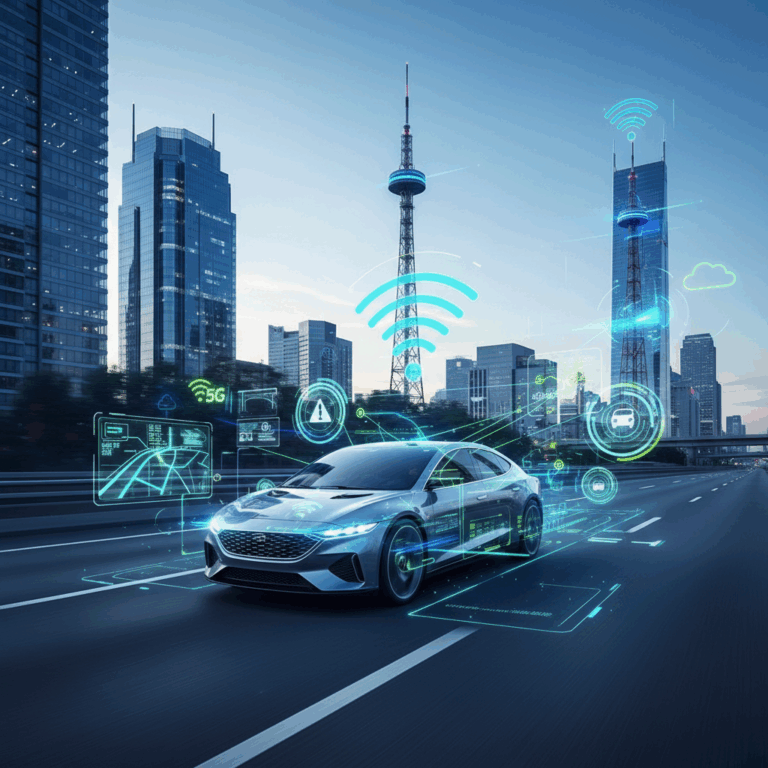
5G Technology Advancements in Automotive Connectivity
5G technology is transforming automotive connectivity with unprecedented speed and reliability. Its high data rates and minimal latency enable vehicles to communicate seamlessly and operate more efficiently.
Automakers are leveraging 5G to enhance driving safety and provide dynamic, real-time updates. This development marks a shift towards smarter, more connected vehicles designed for the future.
High-Speed Data Transmission and Low Latency
5G offers data transmission speeds up to 100 times faster than 4G, enabling instant communication between vehicles and infrastructure. This low latency is critical for real-time decision-making and responsiveness.
Such rapid data flow supports advanced features like live traffic updates and on-the-fly software upgrades, which contribute to smoother and safer driving experiences for users worldwide.
Moreover, 5G’s minimal latency drastically reduces delays, ensuring near-instant interaction between vehicles and surrounding systems, which is vital for autonomous driving and emergency responses.
Integration by Leading Automotive Brands
Major automakers like BMW, Mercedes-Benz, and Audi are already integrating 5G into their latest models, turning cars into highly connected digital platforms. This integration is shaping the future of mobility.
These brands utilize 5G to improve in-car connectivity, enable real-time communication, and offer services such as enhanced navigation and safety systems, making driving more intuitive and efficient.
The commitment from industry leaders to embed 5G technology highlights its importance in driving innovation and enhancing user experience within the automotive sector.
Enhanced Vehicle Communication Systems Enabled by 5G
5G technology dramatically improves vehicle communication systems by enabling faster, more reliable data exchange among vehicles and infrastructure. This advancement fosters safer and more efficient transportation.
By facilitating real-time interaction, 5G supports complex communication frameworks that allow vehicles to anticipate and respond swiftly to their surroundings, ultimately enhancing road safety and traffic management.
Vehicle-to-Vehicle (V2V) Communication
Vehicle-to-Vehicle communication leverages 5G to share vital information like speed, location, and trajectory between nearby cars instantly. This exchange helps prevent collisions and synchronizes traffic flow.
With 5G, V2V communication achieves minimal latency, allowing vehicles to warn each other about hazards or sudden stops almost immediately, improving overall road safety across diverse environments.
Such connectivity enables cooperative driving strategies, like platooning and adaptive cruise control, which increase fuel efficiency and reduce congestion while maintaining safe distances on the road.
Vehicle-to-Everything (V2X) Interaction
Vehicle-to-Everything communication extends beyond cars, allowing vehicles to interact with pedestrians, traffic lights, and urban infrastructure. This holistic communication network ensures smarter traffic systems and urban mobility.
With 5G’s high bandwidth, V2X supports dynamic data exchange that helps vehicles adjust routes, speed, and behavior based on real-time environmental conditions, reducing accidents and improving traffic flow.
Integrating V2X enables enhanced situational awareness, such as detecting pedestrians or cyclists instantly, which is crucial for safer urban driving and the development of autonomous vehicles.
Real-Time Software Updates and Dynamic Mapping
5G enables vehicles to receive software updates in real time without service interruptions, ensuring systems remain current with the latest safety features and performance optimizations.
Dynamic mapping powered by 5G allows cars to access live traffic, road hazards, and environmental data, helping drivers and autonomous systems adapt quickly to changing conditions.
This capability ensures that vehicles maintain optimal navigation routes, enhancing efficiency while reducing travel time and fuel consumption through constant map refinement.
Interesting Fact About Dynamic Mapping
Dynamic mapping integrates crowdsourced data from connected vehicles, creating a continuously updated and accurate representation of road conditions worldwide, enhancing navigation precision.
Impact of 5G on Autonomous Driving
The advent of 5G technology is revolutionizing autonomous driving by enabling faster data exchange and almost instantaneous communication with the environment. This advancement is vital for enhancing vehicle safety and operational efficiency.
With 5G, autonomous vehicles can react quickly to changing road conditions, reducing the risk of accidents and improving coordination between multiple vehicles. This technology lays the foundation for safer, smarter transportation systems.
Improved Safety and Real-Time Coordination
5G’s ultra-low latency allows autonomous vehicles to communicate instantly with their surroundings, crucial for avoiding collisions and navigating complex traffic scenarios safely. This quick response time elevates safety standards.
Real-time coordination among autonomous vehicles becomes possible through 5G networks, enabling synchronized movements and cooperative behaviors, such as platooning, which enhance traffic flow and reduce congestion.
Moreover, 5G connectivity supports the seamless integration of sensors and external data sources, allowing autonomous systems to make smarter decisions by constantly updating situational awareness.
Passenger Experience and Future Automotive Trends
5G technology revolutionizes the passenger experience by enabling seamless streaming of entertainment and enhanced connectivity features. This transforms car journeys into immersive digital environments.
With uninterrupted high-speed internet, passengers can enjoy video calls, cloud gaming, and on-demand content, making travel more engaging and productive. Connectivity now extends beyond driving to in-car lifestyle.
Streaming Entertainment and Connectivity Features
5G’s ultra-fast speeds support high-definition video streaming, allowing passengers to access their favorite media without buffering or delays. This enhances comfort on long trips and daily commutes.
Additionally, connectivity features like real-time GPS, voice assistants, and vehicle-to-internet services improve convenience and personalization, making the cabin experience smarter and more interactive.
Passengers benefit from continuous access to cloud services and smart apps, creating a connected space that supports work and leisure while on the move, reshaping expectations for in-car technology.
Foundations for Advanced Driver Assistance Systems
5G lays the groundwork for sophisticated driver assistance systems by enabling rapid data exchange between sensors, cameras, and cloud-based analytics. This improves real-time decision making.
These systems enhance safety by providing early warnings, adaptive cruise control, and collision avoidance, helping drivers react promptly to complex road situations supported by 5G’s low latency.
As these technologies evolve, 5G will support more autonomous features, increasing vehicle intelligence and enabling safer, more efficient driving experiences with continuous system updates.