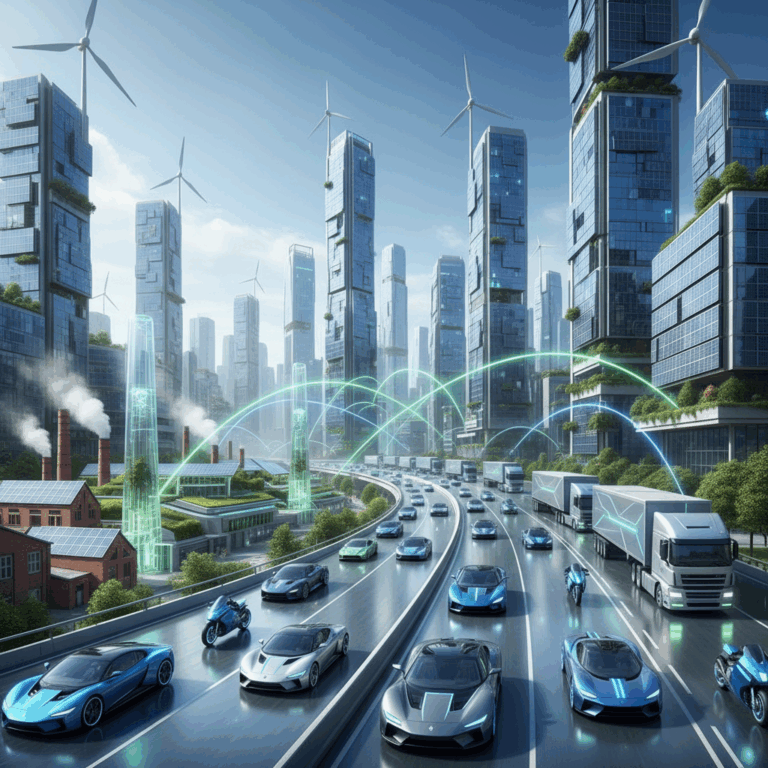
Factors Driving Electric Vehicle Adoption
The rise of electric vehicles (EVs) has been propelled by significant changes in environmental awareness and supportive government policies worldwide. Consumers and governments alike are recognizing EVs’ potential to reduce pollution and combat climate change.
These factors have prompted shifts in industry focus, encouraging manufacturers and policymakers to promote electric mobility through incentives, regulations, and investments that drive adoption forward.
Technological progress, particularly in battery development, also plays a crucial role in making EVs more practical, affordable, and appealing for everyday use, accelerating their acceptance globally.
Environmental Awareness and Government Policies
Increasing public concern about climate change has heightened demand for greener transportation alternatives, positioning EVs as a key solution. Governments have responded with stricter emissions standards and subsidies for EV buyers.
Many countries have implemented tax incentives, rebates, and regulations to encourage EV adoption. These policies lower purchase costs and improve infrastructure, helping consumers transition away from fossil fuel vehicles.
Additionally, urban areas are promoting zero-emission zones and restricting combustion engine usage, creating further motivation for individuals and businesses to switch to electric vehicles.
Advancements in Battery Technology
Battery innovations have been pivotal in enhancing EV performance, especially in terms of range, charging speed, and cost reduction. Improved energy densities allow vehicles to travel farther on a single charge.
Costs of lithium-ion batteries have fallen dramatically, making EVs more competitively priced compared to conventional cars. Ongoing research aims to extend battery life and increase sustainability through new materials.
This progress reassures consumers concerned about range anxiety and charging convenience, directly impacting market growth and encouraging manufacturers to invest heavily in battery technology development.
Changes in Automotive Manufacturing
The electric vehicle revolution has transformed automotive manufacturing, emphasizing new production methods tailored for EVs. This shift includes integrating battery production directly into vehicle assembly lines.
EVs require fewer mechanical components than traditional cars, enabling manufacturers to simplify designs and optimize manufacturing processes. Factories are evolving to meet sustainability goals alongside efficiency demands.
The transition to electric mobility mandates continuous innovation in factory setups, with a focus on reducing emissions and waste while maintaining high production quality and capacity.
Integration of Battery Production
Battery production has become a core part of the EV manufacturing process, often integrated within automakers’ facilities rather than outsourced. This vertical integration improves supply chain control and reduces costs.
Companies investing in battery production enjoy faster innovation cycles and better quality assurance. Close collaboration between battery and vehicle assemblers enhances design compatibility and overall efficiency.
Such integration supports scaling up EV output to meet soaring demand while addressing challenges in raw material sourcing and sustainability practices for battery components.
Simplification of Vehicle Components
Electric vehicles fundamentally simplify the vehicle architecture by eliminating complex internal combustion engine parts. This reduces the number of components needed and lowers maintenance requirements.
The streamlined design facilitates faster assembly and fewer production errors, helping manufacturers reduce costs and lead times. This also allows for more modular and flexible vehicle platforms.
By focusing on essential systems such as electric motors and battery packs, manufacturers can innovate faster in key areas like software integration and vehicle connectivity features.
The reduction of mechanical complexity creates opportunities for enhancements in safety, performance, and sustainability over traditional vehicles.
Adaptation of Factories for Sustainability
Automotive factories are undergoing extensive adaptations to support sustainable production processes aligned with EV manufacturing. Energy-efficient equipment and renewable energy sources are increasingly utilized.
Waste reduction programs, circular economy initiatives, and water conservation measures are being integrated within manufacturing plants to minimize environmental impact.
Investments in smart factory technologies improve resource management and process optimization, helping factories reduce their carbon footprint while increasing production agility.
Interesting Fact: Zero-Emission Plants
Leading manufacturers are developing zero-emission factories that rely fully on renewable energy and electrified processes, setting new standards for sustainability in the automotive industry worldwide.
Development of Charging Infrastructure
The growth of electric vehicles depends heavily on the availability of a comprehensive charging infrastructure. Expanding charging stations makes EV ownership more convenient and practical for users everywhere.
Reliable access to chargers reduces range anxiety and encourages more people to switch from traditional vehicles. Building this network requires coordinated efforts among governments, businesses, and utility providers.
Continued improvements in charging speed and station density are critical to support the increasing number of electric vehicles on the road and to promote sustainable transportation.
Expansion of Charging Stations
Widespread deployment of charging stations is key to supporting electric vehicle adoption globally. Both fast chargers on highways and slower chargers in urban areas are being installed at a growing pace.
This expansion targets various locations, including public spaces, workplaces, and residential neighborhoods, ensuring convenient access for diverse user needs. Rapid chargers help reduce charging time significantly.
The increase in charging points also facilitates longer trips, enhancing the practicality of EVs and addressing concerns about being stranded without power. Governments often provide grants and incentives for station installation.
Role of Public and Private Investments
Funding for charging infrastructure comes from a mix of public and private investments. Governments invest through subsidies and infrastructure programs to jumpstart network growth and encourage private sector participation.
Private companies, including energy providers and automakers, also invest heavily in expanding charging networks to attract EV customers and establish market dominance.
This collaboration accelerates technological advances in charging equipment, grid integration, and payment systems, making EV charging more accessible and user-friendly.
Market Growth and Regional Dynamics
The electric vehicle market continues to experience robust growth globally, driven by technological advances, infrastructure development, and supportive policies. The market is set to expand significantly over the coming years.
Projections estimate that the global EV market size will increase from $396.4 billion in 2024 to approximately $620.3 billion by 2030, with a compound annual growth rate (CAGR) of 7.7%. This signals strong investor and consumer confidence.
Global Market Size and Forecast
The EV market’s expansion is fueled by improving battery technologies that enhance range and affordability, enabling wider adoption among consumers. Manufacturers are rapidly scaling production capacity to meet demand.
Public and private investments in charging infrastructure further bolster market growth by addressing one of the main barriers to EV use: charging accessibility and convenience. These investments support a sustainable and scalable EV ecosystem.
Future forecasts predict sustained growth as more regions implement electrification targets and consumers shift preferences toward cleaner transportation options, accelerating replacement of fossil-fueled vehicles.
Leading Regions in Electric Vehicle Sales
Asia-Pacific, led by China, dominates the EV market both in production and sales, benefiting from strong government incentives and a vast consumer base. China remains the largest EV market worldwide.
Europe also plays a significant role in EV adoption with countries setting ambitious emissions reduction targets and investing heavily in charging infrastructure and clean energy usage, fostering a competitive EV environment.
In 2024, over 17 million EVs were sold globally, accounting for more than 20% of total vehicle sales. This trend is expected to continue as technology improves and costs decline.